Special Events
This is a tough one……some of the most interesting festivals and events around the Kingdom seem to happen in secret. There are some special events you can do any day, or each week, or anytime you want. There are also annual festivals, concerts, street parties and celebrations….these are the ones which are inexplicably hard to find out about, but we’ve tried to include everything we know about. If you’ve heard of a special event you’d like to know more about, and you can’t find it listed below, just use our response form to ask us for details. If we don’t know, we’d love to find out!
Here’s the latest information we have about special events planned in Jordan. For up-to-the-minute information, please check with us for schedule changes, reservations, prices and the like.

Hand Crafts
Handicrafts in Jordan, not surprisingly, are a reflection of the rich history and cultural diversity of the Jordanian people. Traditional Bedouin crafts represent the most basic living requirements – weaving for the tents and rugs, silver jewelry and embroidery to display tribal affiliations and status, herbal preparations for medical needs. The decorative arts which you can admire in mosaics, frescoes and stone carvings still adorning the country’s famous archaeological sites have been handed on and enhanced by craftsmen trained to restore the ancient monuments and to create contemporary artistic statements.
Participation in a handicraft workshop is a unique way to acquire new skills, let loose your creative urges and interact in a very personal way with your mentors. Touring a selection of handicraft centers can be equally enriching, whether your interest is in the production itself or simply in acquiring a unique hand-crafted momento of your visit to Jordan
Here are some examples of the most noteworthy handicraft traditions in Jordan:
Bedouin weaving has traditionally been an essential survival skill. Long narrow strips of hand-woven goat hair make up the “Bait Shar” (literally ‘house of hair’) black tents that Bedouins live in, and rugs are woven from the family’s sheep’s wool, using organic dyes to create elemental stripes or simple geometric designs.

Voluntourism
WHAT IS VOLUNTOURISM?
Just as it sounds, “Voluntourism” is the combination of volunteer service with tourism. Chances to volunteer are abundant, ranging from a well-know service program like the Peace Corps to something as simple as spending a few hours working with children in a special education class.
For many travelers, Jordan is a land of mystery, history and majesty…..and let’s be honest; it’s also a little bit scary. Potential visitors will be warned again and again by friends and family that they’re heading into a dangerous place, with people predisposed to dislike them. What better way to dispel that myth than to bring you together with ordinary Jordanians, in a setting completely outside the well-worn “tourist trail.” What better way to help us Jordanians understand who you are and how you live? What better way for you to understand that your Jordanian hosts are people who share the same hopes, dreams and daily problems as yourselves? What better way to start tearing down the walls of suspicion than by fostering one-to-one interactions, in a setting which benefits all concerned?
Voluntourism can be many things—it can be conversing with a third-grade English class, or helping a handicapped child with his fingerpainting, helping Habitat for Humanity put up new shelters or cleaning the litter from a hiking trail.
Opportunities abound, and visitors are eager to lend a hand…..so what are we waiting for?
WHAT CAN I DO?
Here are a few of the opportunities which can be added to your touring program, with volunteer service ranging from 3-4 hours (usually morning hours) to one full day or more:
Wadi Musa Handicapped Society–The center is open five days a week (Sundays through Thursdays), and provides both academic and vocational training for children who are physically or mentally challenged. You can help run a handicraft class, share your special insights in basic academic subjects or organize a session of songs, dances and games. English/Arabic translators are on hand–but of course smiles are a universal language!
Royal Society for the Conservation of Nature–Jordan’s excellent RSCN, the non-governmental organization charged with conservation and management of the steadily increasing number of spectacular Jordanian wilderness areas, has a wide range of projects available for visitor participation. The needs are seasonal and evolve over time. Projects range from helping local residents create organic herb farms to support the Guest House kitchens, to helping with bird and wildlife census, to helping log and file Ranger reports. A suitable project can be designed based on your skills, time available and area of interest. For more information about the nature reserves of Jordan, visit the RSCN’s website.
Humane Center for Animal Welfare–Located between Amman and the Queen Alia airport, this shelter is open six days a week (Saturdays through Thursdays). They can always use volunteers to help provide direct care and some loving attention for their “guests.” The Center also runs educational programs, so if you have expertise on the subject you might be a guest lecturer.
Abraham Path/Al Ayoun Hiking Trail–This multi-faith, multi-cultural hiking trail is now being surveyed, and a portion of the trail just outside the Ajloun Nature Reserve has already been way-marked for use. We need volunteers to help build the infrastructure of this splendid pilgrimage path through some of Jordan’s most scenic countryside. Volunteer projects in the villages along the path are helping to familiarize rural Jordanians with what to expect from their visitors, and giving them immediate benefits from the development of this hiking trail. For more information on this exciting new trail, visit the Abraham Path Initiative website at www.aAbraham Path/Al Ayoun Hiking Trail–This multi-faith, multi-cultural hiking trail is now being surveyed, and a portion of the trail just outside the Ajloun Nature Reserve has already been way-marked for use. We need volunteers to help build the infrastructure of this splendid pilgrimage path through some of Jordan’s most scenic countryside. Volunteer projects in the villages along the path are helping to familiarize rural Jordanians with what to expect from their visitors, and giving them immediate benefits from the development of this hiking trail. For more information on this exciting new trail, visit the Abraham Path Initiative website at www.abrahampath.org
Wadi Musa public school system–Head back to the classroom for a chance to share and compare life experiences with Jordanian school children. If you have a special talent or discipline you’d like to share, be sure to let us know. Or help classes of English students brush up on their conversational skills, learn your favorite poem or listen to a story. Geography students would enjoy hearing about where you’re from and how it compares to Jordan. The opportunities are endless, and so is the satisfaction. Public schools in Jordan are in session Sundays through Thursdays, 08.00-14.00. Classes are closed during the summer months, public holidays, term breaks and examination periods.
Handicraft cooperatives–We have identified several excellent women’s’ cooperatives around the country who make high-quality products but face a challenge in the area of design. If you’re a crafty person, why not spend some time helping these women develop products well suited to the international market’s ever-changing appetites?
WHY SHOULD I BE A “VOLUNTOURIST”?
We are firmly convinced that the best way to help solve the world’s problems is to build one-on-one human bridges across the chasms of ethnic, political and religious divisions.
We will help you find opportunities that suit your available time and talents.
One thing is certain—you’ll take home souvenirs of the heart!

Health and Wellness
Jordan has been a destination for health and wellness travelers since antiquity. Herod’s fortress at Mukawir was built because he made frequent visits to the natural hot springs at Callirhoe, which you can still visit today. The Nabateans exported Dead Sea minerals to Pharaonic Egypt for centuries. These age-old restorative treatments can still be enjoyed today, with the added therapeutic advantages of modern medical and relaxation techniques.
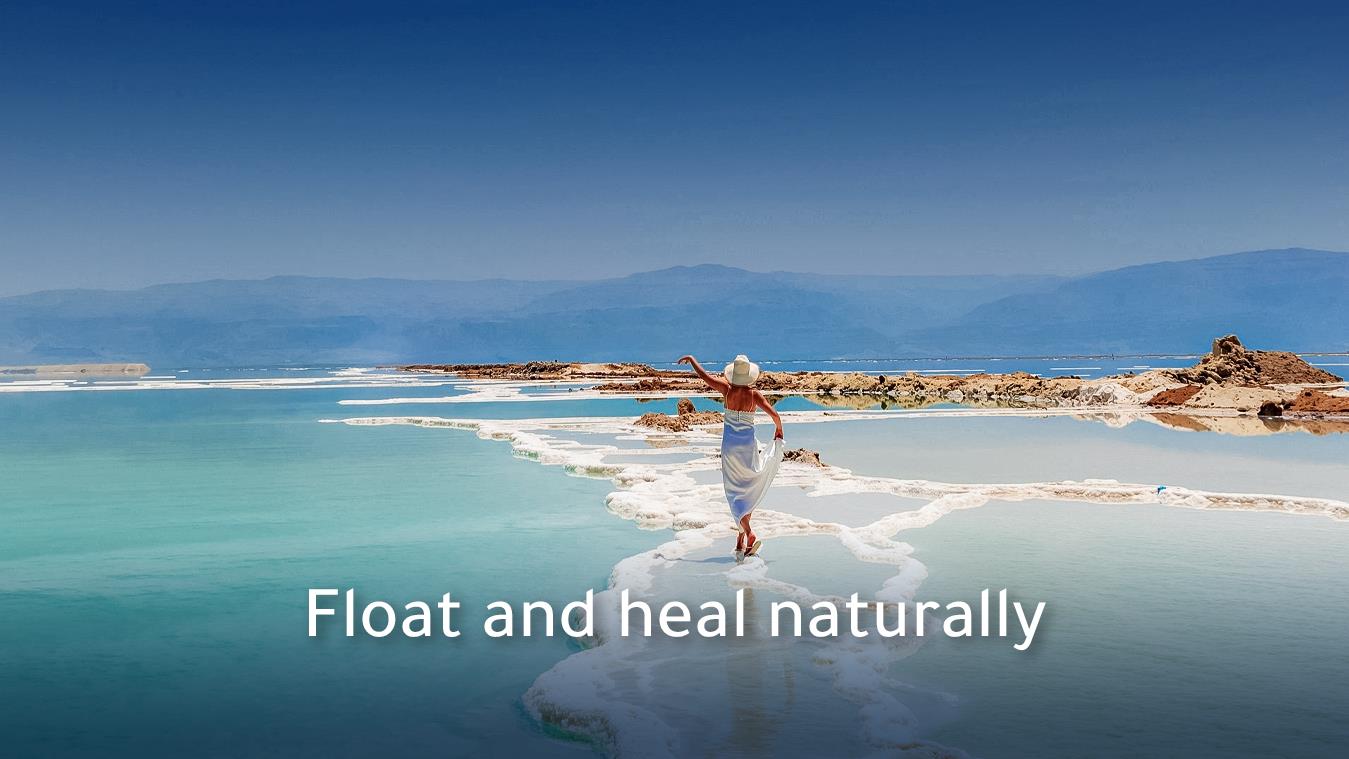
The Dead Sea, lowest point on the earth’s surface, is Jordan’s most famous nature Spa. There are a growing number of luxurious wellness Spas along the northern shoreline where you can pamper yourself with custom-tailored beauty and fitness programs. The Sea is 400 meters below sea level, providing an extra-rich oxygen layer and augmented UV protection while you rejuvenate body and soul.
There are also two internationally renowned medical clinics at the Dead Sea, where physicians and specially trained therapists provide one- to four-week programs designed to relieve the symptoms of psoriasis, vitiligo, neurodermitis, uveitis and similar diseases of the skin and joints.
At Hamamat Ma’in, natural hot springs complement the variety of wellness treatments available at the luxurious Six Senses Spa and Resort.
Amman and Petra both have a variety of places where you can experience a traditional Turkish Bath with hammam (soap) massage.
If you’re interested in traditional medicines and herbalist cures, see our handicraft tours page for more information about special touring programs.

Archaeological
In the center of the Fertile Crescent which spawned the earliest great civilizations, Jordan was situated to watch the mighty empires grow and fall, each leaving its artifacts and reminders, each contributing to the wealth of sites and artifacts which may still be viewed.
As the archaeologist or enthusiastic amateur knows, later civilizations leave a more impressive visual record unless you’re especially interested–we wouldn’t recommend a steady diet of Neolithic or Bronze Age sites unless you get excited by wall lines and early artifacts.
At any given time there are an average of six archaeological expeditions of different sorts going on around Jordan. Where it fits your interest and the excavator’s inclinations, we will try to include stops at current work sites in your program. It’s always nice to hear about a site from the people who are painstakingly uncovering its history.
If you have special interests in a particular archaeological era, let us know about that. We will talk to the experts and make sure you have the opportunity to indulge your appetite for early Islamic architecture, Roman road-building, Nabatean hydrology or whatever you find especially fascinating.
Listed below are a non-specialist’s grouping of archaeological periods, along with some of the most important sites from each period to be seen….so far.
Man’s Beginnings
Natufian, Neolithic and Bronze Age sites in Jordan are a continuing source of excitement to the scholar. The Pre-Pottery Neolithic site at Ain Ghazal, in Amman, produced among its finds the remarkable human statues now displayed in the National Archaeological museum. The Baidha Pre-Pottery Neolithic site built over an earlier Natufian camp is one of the earliest agricultural villages, and still remarkably well preserved, as are the nearby series of roughly contemporary villages in Basta, Ba’ja and Shakaret M’Seid.
The copper mines of Finan, in Wadi Araba, played a key role in the development of a wide scattering of early Bronze Age sites particularly in the Jordan Valley. By the late Bronze Age, Jordan’s settlements reflected the tremendous rivalry existing among the New Kingdom dynasties in Egypt, to the southwest, the Hittite forces of Anatolia, to the north, and the Mittani kingdom of Iraq/Syria to the northeast.
Amman, Moad and Edom
These three kingdoms of those interminable Biblical wars were located in what is now the western region of Jordan. The Edomites, who may have remained primarily nomadic, were engaged in the lucrative spice trade from the Arabian peninsula, as attested by the scattering of sites in and around Petra and Sela (near modern Tafila). The more urbanized kingdoms of Moab and Ammon, with lush arable fields, encompassed a number of excavated sites particularly around Amman, Madaba and Karak. The Mesha stela, erected at Diban (between Karak and Madaba), records the triumph of the Moabite king Mesha over his enemy Ahab, king of the Israelites.
The Nabatean Empire
From their beginnings in the Arabian peninsula as brigands preying on the rich spice caravans, the Nabateans evidently realized more profits were to be made by protecting, provisioning and brokering for the caravans. As masters of the important technology of trapping and storing water, they built a commercial empire that eventually reached from Yemen to Damascus and west into the Negev and Sinai deserts. The monuments and water systems of the Nabateans radiate outward in all directions from their mountain fastness in Petra. Nabatean water cisterns are to be found in use through Jordan’s desert areas. Their ingenious trapment channels, with only modest maintenance, still channel enough of the scarce run-off rain water to fill the jerrycans of modern herders.
As a dominant trading empire along the valuable trade routes of the ancient world, Nabatea radiated throughout the region. Nabatean cities and temples were in many cases converted into Roman fortresses and Byzantine garrisons as the centuries passed. With shifting trade routes, some Nabatean sites saw only modest re-use by later political masters. Whatever the case, fine Nabatean architecture and artifacts have been uncovered or are still to be found from the southern deserts of Wadi Rum through the Syrian border area.
Petra–Queen of the Caravan Cities
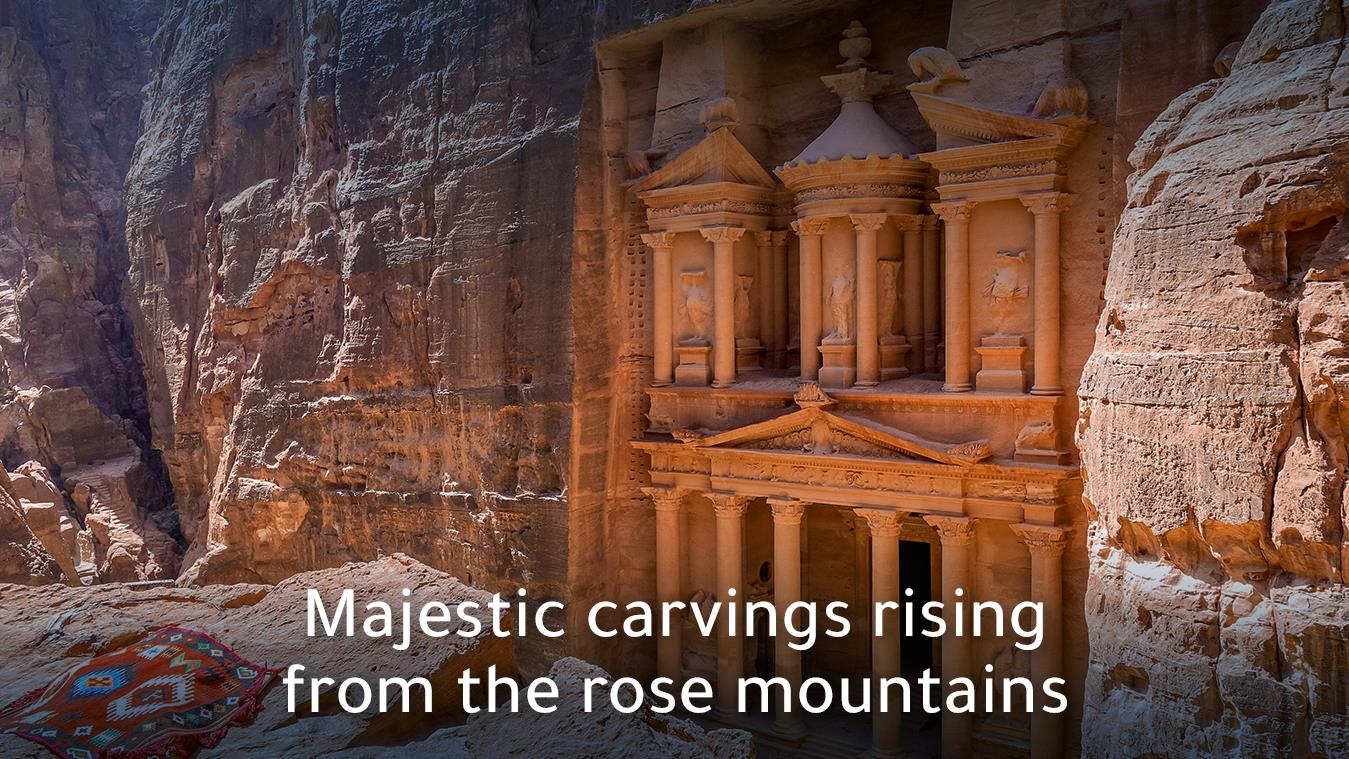
This easily defended site, supplied with plentiful fresh water, is a microcosm of the ancient civilizations in Jordan. From Natufian and pre-pottery Neolithic settlements through Edomite, Nabatean, Roman, and Byzantine eras, Petra was inhabited by successive traders who left impressive characteristic artifacts. The Crusaders fortified two sites within Petra as outposts of the nearby castle of Mont Real (Shobak). During the late Ottoman rule a garrison was erected to control the local Bedouin tribes, still used as the modern police station. Covering more than 40 square kilometers, the natural beauty and fascinating history of Petra are worthy of an extended visit.
Cities of the Decapolis
Important trading centers during the Hellenistic squabbles over the remains of Alexander’s Empire, this unique ten-city league, later used and extended by the Romans, figures prominently in the history of the region. The best-preserved of the sites are at Jerash (Gerasa), Amman (Philadelphia), Um Qais (Gadara) and Pella. Abila and Capitolias, near the city of Irbid, are less complete and more intriguing for the imaginative visitor.
Scythopolis, the only Decapolis city west of the Jordan River, is adjacent to the northern Jordan/Israeli border checkpoint at Beit Shan, providing an easy day excursion.
Roman Arabia
Finally annexing the Nabatean Empire in AD 106, Roman forces engaged in their characteristic engineering overhauls, scattering roads, temples, theaters, fora and other monumental buildings throughout modern Jordan. The great Via Nova Traiana, the trunk road connecting the Red Sea port near Aqaba to Bosra (southern Syria) has recently been re-surveyed, and besides the more famous cities a number of garrisons and way stations throughout the country repay the interested visitor.
The Golden Age of Islam
Following early clashes at the Yarmouk, the Islamic conquest swept northward from the Saudi peninsula, factionalized following the death of Mohammed with a new center of power vested in the Umayyad caliphs of Damascus. The so-called ‘Desert Castles’ of Jordan, built as hunting lodges and retreats for the Umayyad rulers, were richly decorated with mosaic and fresco. The governor’s complex in Amman, situated on the Citadel of the Decapolis city of Philadelphia, displayed a style of decorative arts owing to Oriental as well as Byzantine influences.
The Crusader Era
From the First Crusade proclaimed in 1095 until the end of the 13th Century, the region experienced tremendous building in support of the conflict between European Christians and the Seljuk Turks, followed by the Mamlukes. A line of Crusader castles and fortresses built to defend the rich trade routes of Oultre Jordain, as the Outremer possessions to the east of the Jordan were known, includes well-preserved remains at both Shobak (Montreal) and Karak, and two fortresses in Petra. The great Qallat ar-Rabadh at Ajlun is a fine example of a purely Islamic castle, built by Saladin’s cousin to command strategic views over the Jordan Valley.

Adventure
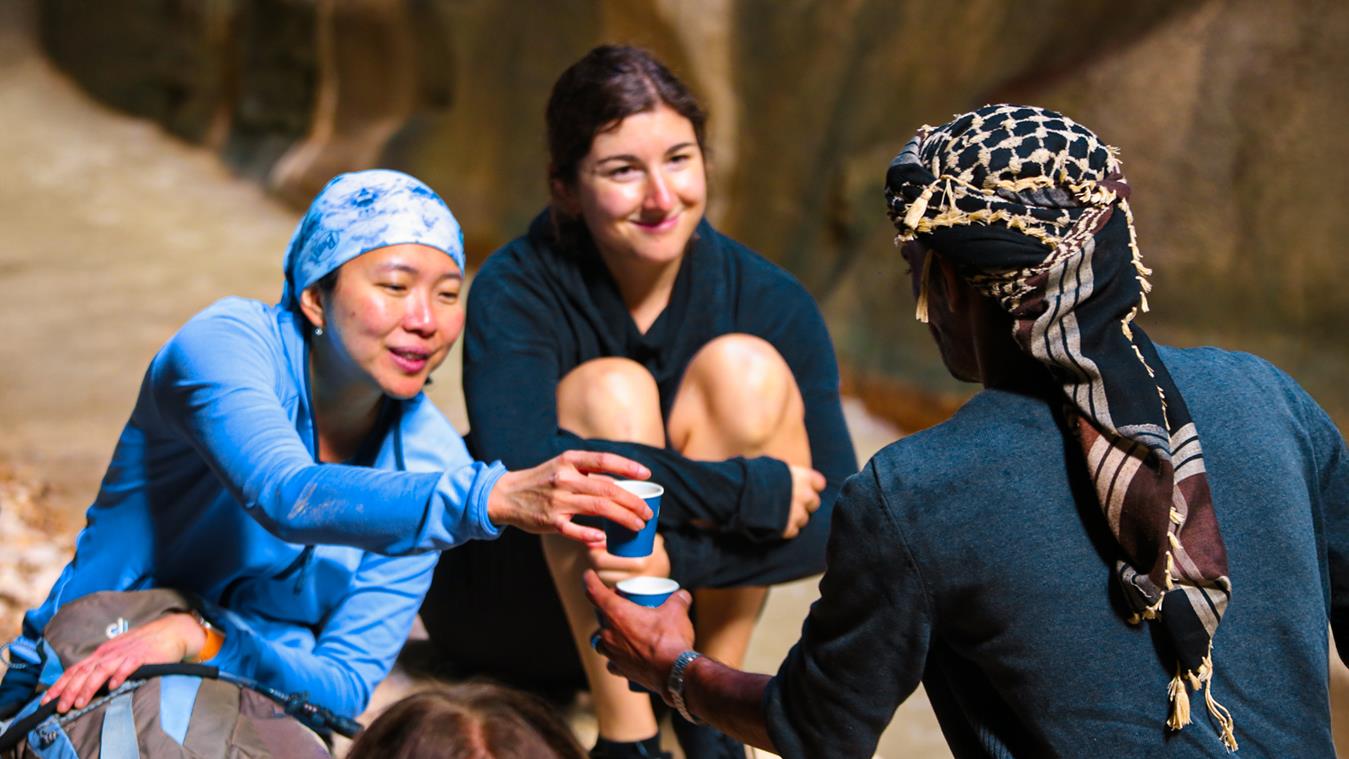
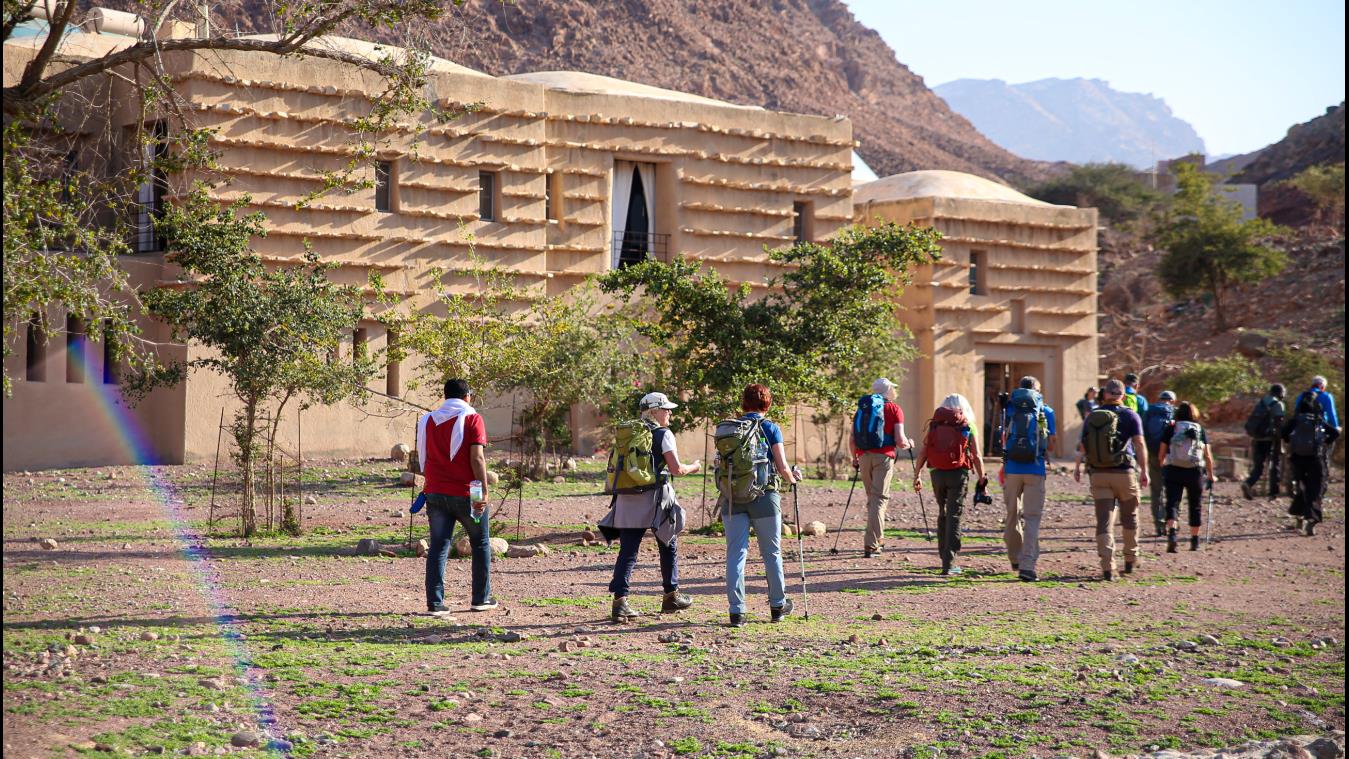
This was our original and still the most exciting business. Whether you want to tour by camel, horseback, jeep, or hiking, Jordan’s combination of splendid natural beauty and unspoiled wilderness areas studded with archaeological remains make camping in Jordan an unforgettable pleasure. Our staff includes experienced trek leaders and a first-rate chef to make sure that you have the energy to keep going!
Throughout history, Jordan has occupied a strategic position along important trade routes. The commerce in spices and silks between the Orient and Europe ran through Jordan. Even today, the highway connecting the Red Sea port of Aqaba to Syria, Turkey, and Eastern Europe is still the single most important overland route for goods being shipped between Asia and Europe. One of the dividends of making a trekking trip through Jordan is the chance to re-trace part of one of antiquity’s key trade routes.
You may decide to combine an adventure excursion with a more ‘classical’ tour which allows you to see more of Jordan’s wonderful sites. Many of the adventure tours can be expanded or collapsed as you like, from a simple day trip or an evening’s Bedouin party in the wilderness to as many days of camping as you want.
All overnight camping programs include full camp services–tents, sleeping bags, full board (3 meals a day including non-alcoholic beverages), camping equipment and support staff.
Petra on the Spice Road
On foot or by camel, explore some of the outskirts of Petra. Caravans en route from the Arabian Peninsula, from India, from China, Damascus, Gaza, and Egypt all converged on the capital city of the Nabatean trading empire…..it is exciting to re-discover some of the ancient roadside features.
The countryside around Petra has a surprising number of natural springs and hidden orchards, unexcavated antiquities sites, and modern Bedouin tent-dwellers. The glorious whorls and bands of colors in the Sandstone Mountains create a feast for the eyes as you traverse the hilly terrain. On foot, you can make a complete circuit around the outskirts of Petra Park in about 4 days, with 3 nights camping along the way.
Wadi Rum Treks
Tell us how much time you have available and we’ll custom-design a trekking program through one of the world’s most famous deserts, Wadi Rum.
By jeep, you can cover most of the Wadi Rum desert area in a couple of days. If you can’t afford the time or would prefer spending the night in a hotel, we will devise a single-day visit including some of the most famous sights such as al-Khazali Mountain with its mysterious rock inscriptions, the Lawrence Spring and the towering rock formation known as the Seven Pillars of Wisdom.
On foot, you can explore the area at a pace more in keeping with the timeless face of the desert. Wadi Rum hiking programs of 3-4 days are ideal if you’re looking for an experience totally removed from your daily routine. In the vast uncluttered heart of the desert, you will find yourself pondering the Big Questions modern life leaves no time for…….and understanding why desert dwellers are credited with introducing the zero, coffee, the Tusi-couple and three of the world’s great religions.
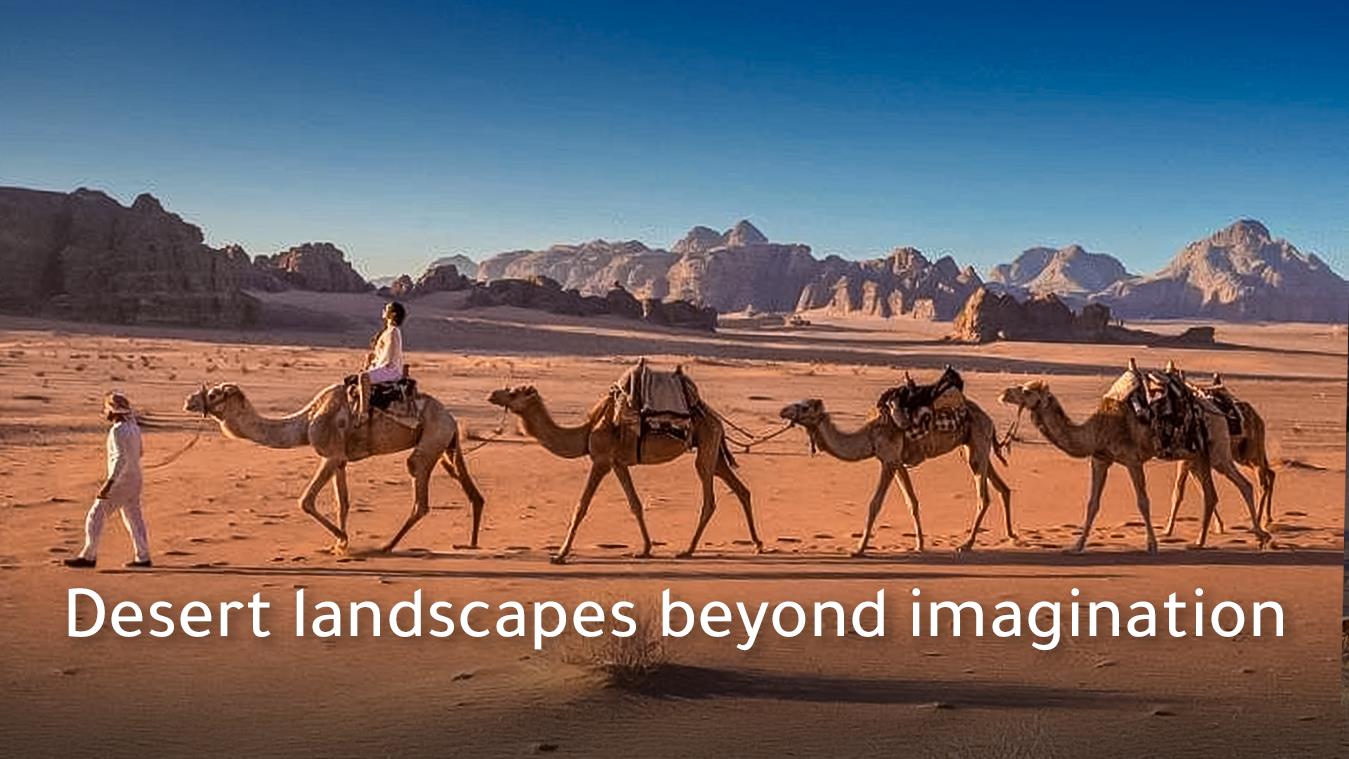
By camel you can retrace the desert trade routes as they’ve been traveled for millennia. A camel can carry enormous loads through the desert for 3 days without feeling the faintest bit of thirst. Their feet look like a Michelin-man version of bovine hooves—a quality you can appreciate after trying to walk comfortably through the desert sands. The dizzying lurch as they kneel and then rise again is like riding a roller-coaster—but at the top of the arc, you’ll have a commanding view of the land around you.
Wadi Araba Trek
Make a one-day jeep trip or 5-day hike from the ancient copper mines of Wadi Finan to Petra.
Dhana-Petra hike
Spend four days walking the scenic route from the Dhana Nature Reserve to Petra. You’ll also find this hike incorporated into our guaranteed departure program Hiking to Petra.
Baidha Excursions
Baidha, the wilderness area just to the north of Petra, contains a staggering number of archaeological sites including a Neolithic settlement believed to be one of man’s oldest agricultural villages. It’s also a beautiful landscape, and seasonally dotted with the black hair tents of Bedouin families. Its proximity to Petra makes Baidha an ideal spot for short excursions by horse, jeep, camel or on foot.
East of the Dead Sea
Hikers in the great wadis emptying into the Dead Sea are rewarded by the colorful terrain and pleasant streams and waterfalls. The mountain tops above the Dead Sea contain remains of Edomite and Moabite settlements familiar to Biblical scholars, and can be explored in a variety of ways. There are a number of challenging one-day hikes from the mountain highlands to the shores of the Dead Sea, and a few wadis which can be enjoyed by almost everyone.

Nature & ECO
With 65% of Jordan’s small population concentrated in the major urban centers, much of the country is wilderness area of unsurpassed beauty and variety. Some of the nature programs are seasonal; others can be enjoyed year-round.
We’re happy to help you make arrangements to enjoy the biodiversity for which Jordan is justifiably famous. Not only in the officially designated nature reserves managed by the Royal Society for the Conservation of Nature (RSCN), but also in rural areas throughout the country, you will be able to get “back to the land” in a delightful variety of ecosystems.
Here are some of the nature-tour areas you may have a special interest in:
Wildlife
Jordan’s biodiversity made it the home to a wide range of species. Desertification and hunting made a number of these species extinct or virtually so in their natural habitats. Thanks to the cooperation of many foreign governments and NGO’s, channeling their efforts through the RSCN, some of these species such as the ostrich, the Arabian oryx and the ibex have now been rescued through land conservation and breeding programs, particularly in the Shumari Wildlife Refuge, the Wadi Mujib Reserve and the Wadi Rum Protected Area. In the Dhana Nature Reserve, men who were once the hunters who over-hunted the local foxes, eagles and ibex are now the specially-trained reserve guides proud to lead visitors around the reserve. It’s a good example of how the RSCN’s motto “Helping Nature…Helping People” has been brought to life.
Petra Moon, the leading tour operator partner to the RSCN, can help you arrange guided hikes, visits to breeding grounds and volunteer work projects in the reserves.
Bird Watching
The wide range of ecosystems in Jordan gives birds plenty of choice for habitat. Open deserts and wetland oases, pine and oak forests and the sub-tropical Jordan Valley and Aqaba flats attract wide varieties of both resident and migrant species. Jordan’s wetlands at Azraq Oasis and Aqaba as well as the highlands above the Great Rift Valley are biennial hosts to birds migrating between Africa and both European and Asian summer homes.
Jordan’s national bird is the Sinai rose finch, pictured at right on a recent postage stamp. More than 425 bird species have been spotted in Jordan, of which 95 species are resident. Hundreds of thousands of birds make their passage through Jordan each year, with many species identified as vulnerable, endangered or critically endangered.
The top bird-watching sites are the Azraq Wetlands Reserve and the newly-opened Aqaba Birdwatching Observatory created by the Jordan Society for Sustainable Development. Other birding “hot spots” are the Dibeen forest, Dhana Reserve and Petra. You’ll find birds wherever you travel in Jordan, but for the birding enthusiast these are “must see” stops along the road. Some of the species you’ll almost surely be able to check off your list include the Bonillo eagle, griffon vulture, Palestine sunbird, hoopoe lark, fan-tailed raven and trumpeter finch.
Flora
There are some 2,500 species of plant species in Jordan–a remarkable thing to contemplate for a country which has so much desert. In the spring much of the country is blanketed with wildflowers including the black iris (Jordan’s national flower), windflower, wild lily, poppy and many others. Commercially grown flowers are a relatively new development in the kingdom, but there are now a number of thriving greenhouses around Madaba and Wadi Seer, and a large new Baidha project north of Petra where local residents have been able to put in commercial plant crops–mainly sunflowers and black iris–through special irrigation arrangements with the area’s new waste water treatment plant.
Indigenous trees found around the country include the red Mediterranean juniper, pistachio, almond, both deciduous and evergreen oak varieties, desert succulents such as the aloe and other sand dune vegetation, and acacia stands. Tucked into the folds of the hills above the rift valley are family and commercial orchards where many varieties of stone fruits and apples are grown.
The Jordan Valley is a microcosm of the planet’s best salad ingredients–almost any sort of fruit and vegetable you could want, but particularly those which flourish in a warm climate, can be found here. Commercial date farms using admirably scientific growing technology produce some of the world’s sweetest and most beautiful dates.
Traditional Bedouin healing practices employ a wide range of herbs, many of which are locally grown and prepared. Sage, many varieties of thyme, rosemary, onion, Artemisia, several mint species and chamomile are among the most commonly found.
Geological Strata and the Great Rift Valley
Jordan can be divided into 5 (or 13, or 28 depending on which expert you consult and how detail oriented he/she is) regions based on its underlying geology–limestone with flight in the highlands and interior deserts, sandstone hills in the Rift Margins and Wadi Rum, ancient basement rocks behind Aqaba, basalt desert in the northeast Badia and the Rift Valley, along Jordan’s western border.
This all means that for the enthusiastic rock-hound, photo opportunity seeker, prospector or admirer of underpinnings, there’s almost no end to the wonderful things beneath your feet, or soaring above you majestically. We know professional geologists who vacation in Jordan year after year to explore its earth-y treasures. The professionals are here, as well–looking for economically feasible extraction sites for the certain shale oil deposits, although so far this has been prohibitively expensive in terms of cost, water consumption or both. That’s comforting….so far.
Red Sea Coral Reefs
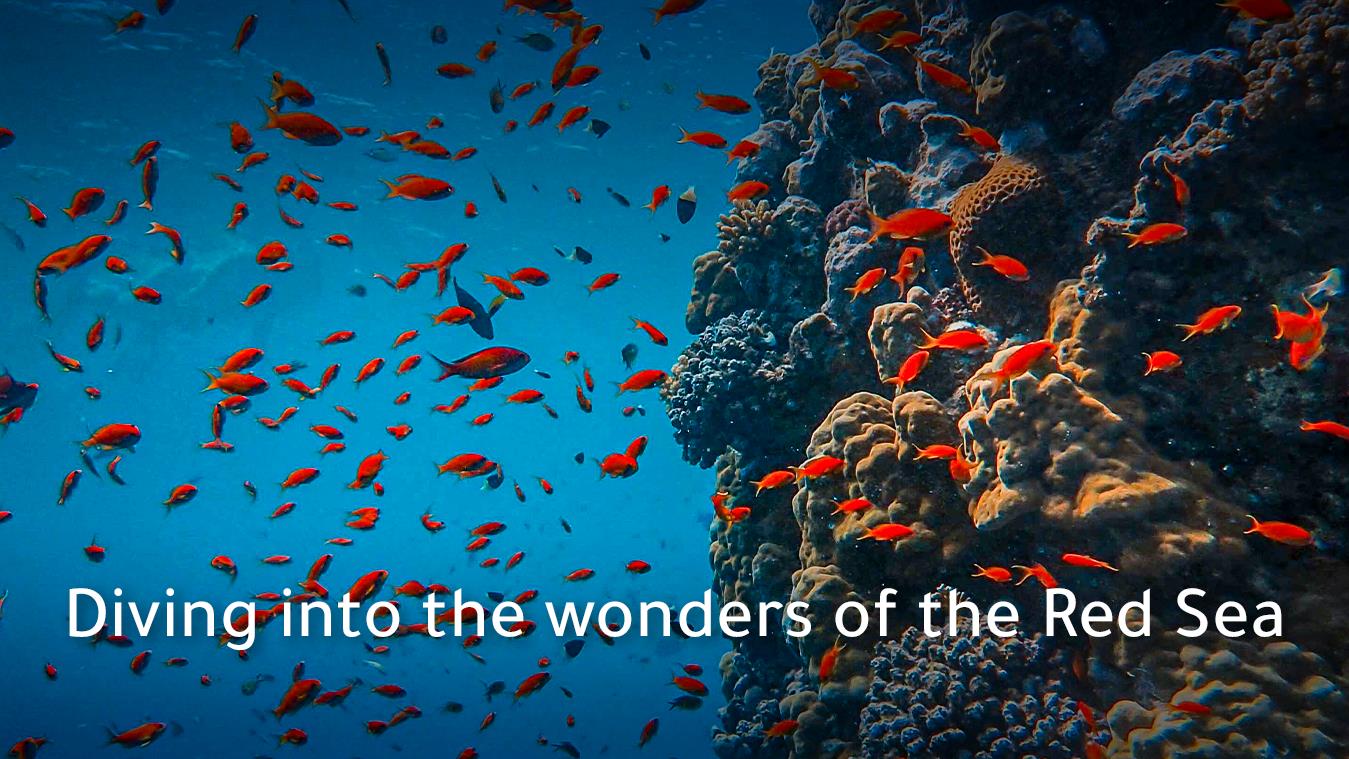
The clear water and rainbow-hued coral reefs make diving in the Red Sea a great experience. For those of us who prefer our breathing stuff un-canned, the snorkeling is just as good. Much shipping of phosphates has caused damage along the reefs of Aqaba, a busy commercial port, but the government has taken serious measures to protect this fragile resource.
Aqaba’s reef is what divers call a fringing reef, close to shore for easy access. There are some world-class diving centers in Aqaba where we can help you arrange dives. If you’re not already qualified, you can register for the basic PADI Open Water Course; if you’d like to become more qualified a full assortment of advanced courses are available.

Family Friendly
Holidays should be fun for everyone in the family. With its spectacular diversity of activities, events and cultural experiences, Jordan is the ideal place to share experiences you’ll remember with pleasure for years to come.
Family holidays are as different as families we’ll help you organize a vacation offering ingredients designed to provide each member of your family with delightful experiences. Use our convenient response form to tell us about the ages and special interests of your family members, and we’ll work with you to custom design a program that gets everyone revved up for an exciting holiday! And of course we’ll remember the basics; hotels with kid-friendly swimming pools, car seats when needed, low-intensity sightseeing plans and flexible itineraries for the days when you just have to get back for a nap or a swim.
Some of our most popular family holiday elements include:
Safari
Make a camel safari through the bright red dunes of Wadi Rum; take a jeep safari through the Shumari Wildlife Refuge; mount your donkeys for a climb to Petra’s ad-Deir (Monastery); spend a day taking a horseback excursion through the Baidha Wilderness or up to the top of Petra’s Jabal Harun. Safaris, like families, come in all shapes and sizes….
Race Show
Ride in a Roman chariot, or try on a Roman helmet and shield…..after watching the exciting Roman Army and Chariot Experience show in the Jerash Hippodrome, take some time to learn how this unique re-enactment program was put together. (Check the Special Events page for more details).
Petra Kitchen
Spend a fun evening working alongside local women to prepare a typical Jordanian feast from scratch. It’s a terrific family experience—and nobody has to do the dishes afterwards! (Check the Special Events page for more details).
Discover Scuba
We’ll hook you up with expert dive instructors who can introduce you to the wonders hidden beneath the Red Sea. (Check the Nature Tours page for more details.)
Starry Nights
Spend an evening in our “zillion-star” canvas hotel in Wadi Rum, where the dazzling night sky of the desert will thrill you. See who can spot the most shooting stars, trace the constellations and enjoy the special peace of a night in the heart of the desert. Without all the distractions which plague us on a daily basis, you’ll have more time to share the rich pleasures of just being a family together.
Handicraft Fun
Learn how to write your name in a sand bottle. Try your hand at making a picture in mosaic. Use dried Jordanian wildflowers to decorate your own special card of hand-made okra stem paper. Write your name in Arabic. Some of the most creative traditional handicraft workshops in Jordan will be pleased to share their skills to help you create a very special souvenir of your family holiday.

Culinary
Get an inside glimpse of the famous regional cuisine of the Levant. The tasty and beautifully presented assortment of mezza (appetizers) which signal the start of a Jordanian meal reflect a cultural tradition of generosity, leisurely meals and lively conversation. Main courses typically combine simple ingredients with an exotic array of spices a reminder that since time out of mind, the land has been at the crossroads of the ancient spice caravans.
Now you can make the secrets of Levantine cuisine your own. We can help you set up a 5-night cuisine course at The Petra Kitchen. Like any home kitchen, The Petra Kitchen is a relaxed, informal atmosphere where you’ll gather to prepare an evening meal, working alongside local women under the supervision of a local chef. Each evening meal includes soup, cold and hot mezza and salads, and a main course—all typical Jordanian dishes.
Your days will be filled not only with visits to Petra, Wadi Rum and other local attractions, but also the chance to visit local farms and orchards and to go shopping in the local markets with the chef. Who knows? Maybe you’ll pick up a working knowledge of Arabic language (at least the all-important food words!) and a little experience at haggling.
You’ll also dine in a few of Jordan’s best traditional restaurants, and sample the best of the rapidly-growing assortment of local wines.
Take home memories….and recipes….so you can invite your family and friends to sample your favorite holiday dishes. They’ll enjoy it more than pictures, we’re sure!

Trekking & Canyoning
Looking for an adventure that will get your heart racing?
Our Trekking & Canyoning Trip Type is the perfect choice for thrill-seekers and nature enthusiasts. Get ready to embark on a journey through rugged terrains, majestic peaks, and breathtaking canyons that will leave you speechless.
With our expert guides leading the way, you'll trek through hidden trails that wind through dense forests, rocky terrains, and challenging ascents. The sense of accomplishment you'll feel as you conquer towering peaks and take in the stunning panoramic views is truly unparalleled.
But the excitement doesn't stop there. Prepare yourself for the adrenaline rush of canyoning, as you navigate narrow gorges, rappel down cascading waterfalls, and plunge into pristine pools below. It's an experience that will leave you feeling invigorated and alive.
As you delve deeper into these remote landscapes, you'll encounter a diverse array of flora and fauna, adding to the enchantment of your adventure. From colorful birds to curious mammals, nature's wonders will surround you at every turn.
Whether you're an experienced adventurer or a beginner seeking a thrilling challenge, our Trekking & Canyoning trips cater to all levels of expertise. Our knowledgeable guides will ensure your safety and provide you with fascinating insights into the local terrain, enhancing your journey with their expertise and passion.
So, gear up, embrace the adrenaline, and get ready for an unforgettable adventure that will leave you with incredible memories and a sense of accomplishment. It's time to explore the wonders of nature and experience the thrill of trekking and canyoning like never before!

Cultural
Embark on a captivating cultural expedition with our Cultural Trip Type, where the tapestry of history, art, and traditions comes alive. Immerse yourself in the rich heritage and the vibrant essence of your destination as our expert guides curate a remarkable journey that will transport you through time and ignite your curiosity.
Prepare to be awestruck as you explore ancient archaeological wonders, walk the same paths as legendary figures, and uncover the secrets of civilizations long past. From the awe-inspiring pyramids of Egypt to the majestic ruins of Machu Picchu, our cultural trips take you to iconic landmarks that have shaped the course of human history.
But it's not just about the grand sites; it's about delving deeper into the heart and soul of a place. Experience the colorful tapestry of local markets, where vibrant stalls overflow with spices, textiles, and handicrafts, each with a story to tell. Immerse yourself in the rhythmic beats of traditional music and dance, as you join in celebrations that have been passed down for generations.
Our cultural trips are not mere observations; they are opportunities for authentic connections. Engage with local communities, engage in meaningful conversations with artisans, and share meals with families who graciously open their doors to welcome you. You'll gain a deeper understanding of their customs, traditions, and way of life, leaving you with a profound appreciation for the diversity and richness of our world.
Delight your taste buds as you savor the flavors of regional cuisine, from mouthwatering street food to fine dining experiences that blend tradition and innovation. Let each bite transport you to the heart of the culture, as you discover the stories behind ancient recipes and the passion that goes into every dish.
Every moment of our cultural trips is thoughtfully designed to ensure your immersion and engagement. Whether it's participating in traditional ceremonies, trying your hand at local crafts, or listening to captivating tales from local storytellers, you'll find yourself enchanted by the authenticity and beauty that surrounds you.
Come, join us on a cultural odyssey, where you'll gain a deeper understanding of our shared human heritage, forge connections that transcend borders, and return home with a newfound appreciation for the diverse tapestry of our world. Let the cultural trip of a lifetime begin.
Nature & ECO
With 65% of Jordan’s small population concentrated in the major urban centers, much of the country is wilderness area of unsurpassed beauty and variety. Some of the nature programs are seasonal; others can be enjoyed year-round.
We’re happy to help you make arrangements to enjoy the biodiversity for which Jordan is justifiably famous. Not only in the officially designated nature reserves managed by the Royal Society for the Conservation of Nature (RSCN), but also in rural areas throughout the country, you will be able to get “back to the land” in a delightful variety of ecosystems.
Here are some of the nature-tour areas you may have a special interest in:
●Wildlife
Jordan’s biodiversity made it the home to a wide range of species. Desertification and hunting made a number of these species extinct or virtually so in their natural habitats. Thanks to the cooperation of many foreign governments and NGO’s, channeling their efforts through the RSCN, some of these species such as the ostrich, the Arabian oryx and the ibex have now been rescued through land conservation and breeding programs, particularly in the Shumari Wildlife Refuge, the Wadi Mujib Reserve and the Wadi Rum Protected Area. In the Dhana Nature Reserve, men who were once the hunters who over-hunted the local foxes, eagles and ibex are now the specially-trained reserve guides proud to lead visitors around the reserve. It’s a good example of how the RSCN’s motto “Helping Nature…Helping People” has been brought to life.
Petra Moon, the leading tour operator partner to the RSCN, can help you arrange guided hikes, visits to breeding grounds and volunteer work projects in the reserves.
●Bird Watching
The wide range of ecosystems in Jordan gives birds plenty of choice for habitat. Open deserts and wetland oases, pine and oak forests and the sub-tropical Jordan Valley and Aqaba flats attract wide varieties of both resident and migrant species. Jordan’s wetlands at Azraq Oasis and Aqaba as well as the highlands above the Great Rift Valley are biennial hosts to birds migrating between Africa and both European and Asian summer homes.
Jordan’s national bird is the Sinai rose finch, pictured at right on a recent postage stamp. More than 425 bird species have been spotted in Jordan, of which 95 species are resident. Hundreds of thousands of birds make their passage through Jordan each year, with many species identified as vulnerable, endangered or critically endangered.
●Flora
There are some 2,500 species of plant species in Jordan–a remarkable thing to contemplate for a country which has so much desert. In the spring much of the country is blanketed with wildflowers including the black iris (Jordan’s national flower), windflower, wild lily, poppy and many others. Commercially grown flowers are a relatively new development in the kingdom, but there are now a number of thriving greenhouses around Madaba and Wadi Seer, and a large new Baidha project north of Petra where local residents have been able to put in commercial plant crops–mainly sunflowers and black iris–through special irrigation arrangements with the area’s new waste water treatment plant.
Indigenous trees found around the country include the red Mediterranean juniper, pistachio, almond, both deciduous and evergreen oak varieties, desert succulents such as the aloe and other sand dune vegetation, and acacia stands. Tucked into the folds of the hills above the rift valley are family and commercial orchards where many varieties of stone fruits and apples are grown.
The Jordan Valley is a microcosm of the planet’s best salad ingredients–almost any sort of fruit and vegetable you could want, but particularly those which flourish in a warm climate, can be found here. Commercial date farms using admirably scientific growing technology produce some of the world’s sweetest and most beautiful dates.
Traditional Bedouin healing practices employ a wide range of herbs, many of which are locally grown and prepared. Sage, many varieties of thyme, rosemary, onion, Artemisia, several mint species and chamomile are among the most commonly found.
●Geological Strata and the Great Rift Valley
Jordan can be divided into 5 (or 13, or 28 depending on which expert you consult and how detail oriented he/she is) regions based on its underlying geology–limestone with flight in the highlands and interior deserts, sandstone hills in the Rift Margins and Wadi Rum, ancient basement rocks behind Aqaba, basalt desert in the northeast Badia and the Rift Valley, along Jordan’s western border.
This all means that for the enthusiastic rock-hound, photo opportunity seeker, prospector or admirer of underpinnings, there’s almost no end to the wonderful things beneath your feet, or soaring above you majestically. We know professional geologists who vacation in Jordan year after year to explore its earth-y treasures. The professionals are here, as well–looking for economically feasible extraction sites for the certain shale oil deposits, although so far this has been prohibitively expensive in terms of cost, water consumption or both. That’s comforting….so far.
●Red Sea Coral Reefs
The clear water and rainbow-hued coral reefs make diving in the Red Sea a great experience. For those of us who prefer our breathing stuff un-canned, the snorkeling is just as good. Much shipping of phosphates has caused damage along the reefs of Aqaba, a busy commercial port, but the government has taken serious measures to protect this fragile resource.
Aqaba’s reef is what divers call a fringing reef, close to shore for easy access. There are some world-class diving centers in Aqaba where we can help you arrange dives. If you’re not already qualified, you can register for the basic PADI Open Water Course; if you’d like to become more qualified a full assortment of advanced courses are available.

Honeymoon
Indulge in an enchanting and romantic journey of a lifetime with our Honeymoon trip type.
Immerse yourselves in luxurious accommodations, breathtaking landscapes, and intimate experiences crafted to celebrate your love and create cherished memories that will last forever.

Education Trip
Travel, in the younger sort, is a part of education; in the elder, a part of experience.- Francis Bacon, Sr., English lawyer and philosopher. 1561-1626
Education, experience, adventures of the mind and senses……with its wealth of history and modern challenges, Jordan is a natural classroom.
Educational tours are of necessity customer-driven. Tell us your focus and we’ll help you design a rewarding educational program.
Some of the educational programs we’ve designed in the past include:
Scout Challenge in Desert Skills.
Ancient Hydrology Systems.
Bedouin Medical Practices and Remedies.
Interfaith Studies Seminar.
Influence of the Jordan River on Successive Civilizations.
Roman Provincial Settlements.
In Search of the Ancient Frankincense Road.
Navigating by the Stars.
The Role of Women in the Modern Jordanian Family.
Nomadic Life in the Modern World.
Early Islamic Architecture.
The possibilities are as limitless as man’s curiosity. Let’s learn together!







_1349x759.jpg)